More Must Be Done to Boost Autogas Adoption in Kenya — For Cleaner Air, Lower Fuel Costs and Energy Security
In many parts of Kenya — from Nairobi’s busy streets to the bustling roads of Mombasa and other towns — traffic continues to climb, and with it, the smoke, fumes and pressure on the environment. Petrol and diesel remain the dominant fuels powering the country’s cars and transport network. But fossil-fuel dependence is proving increasingly costly: for people’s health, the national economy and the environment.
Globally and regionally, there is now growing interest in cleaner, more affordable alternatives. One of the most promising is vehicle-ready ‟autogas” (i.e. Liquefied Petroleum Gas, LPG) — and Kenya has already started moving in that direction. Still, uptake remains modest. To fully unlock autogas’s potential, stronger incentives, infrastructure investment and regulation are needed.
Why Autogas Makes Sense — Economics, Environment, and Energy Stability
- Cheaper fuel: Autogas can be 30–40 % cheaper per litre compared with petrol or diesel in many regions. The Standard+2Tnx Africa+2
- Cleaner emissions → cleaner air: LPG burns more cleanly than traditional fuels. That means fewer pollutants, better air quality, and reduced health risks — especially for urban residents who breathe dense vehicular emissions daily. petrocityafrica.com+1
- Protection from oil price volatility: As a net importer of petroleum products, Kenya is highly vulnerable to shifts in global oil markets. Switching some consumption to autogas cushions households, transporters and even the national economy from those swings. The Standard+1
- Growing interest: According to the lobby group World Liquid Gas Association (WLGA), an estimated 15,000 vehicles have already been converted to run on autogas in Kenya — evidence of rising demand. The Standard+1
Given these advantages, autogas could play a big role in Kenya’s drive toward sustainable, affordable, and stable energy consumption.
The Challenges Holding Back Autogas Uptake
Despite the potential, uptake remains weak. Key challenges include:
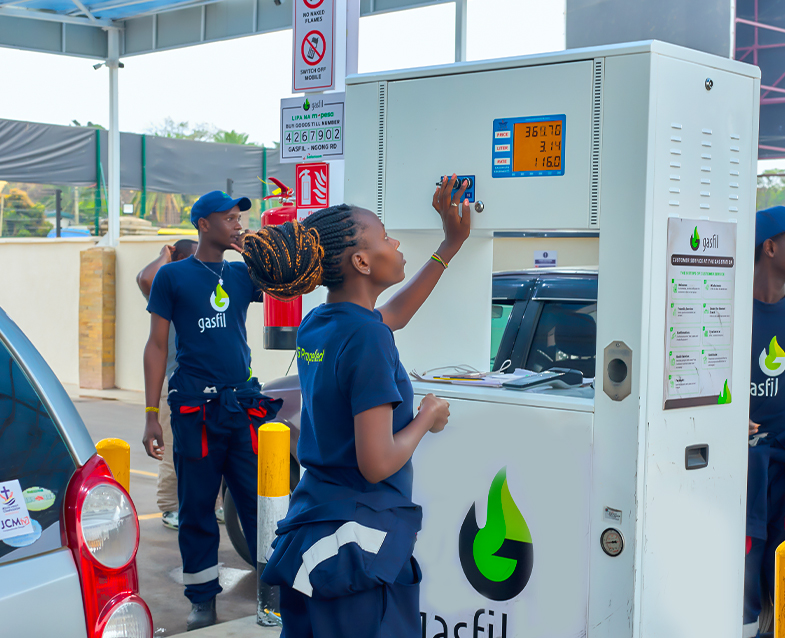
- Limited infrastructure: As of June 2024, Kenya had only 17 operational LPG-refuelling stations — not nearly enough to support mass conversion of vehicles. The Standard+1
- High conversion costs: Converting a petrol or diesel vehicle to run on autogas requires specialized conversion kits — and those can be expensive for ordinary motorists.
- Safety and standardization concerns: Without strong regulation, conversion kits and LPG systems can be sub-standard, increasing risk for accidents. Indeed, past tragedies (e.g. gas-related blasts) highlight the danger of weak safety oversight. The Standard+1
- Lack of public awareness and trust: Many motorists may not know about autogas, its benefits, or how to convert safely. Others may worry about access to refill stations or long-term reliability.
- Unfavorable tax/policy environment compared to petrol/diesel: Currently, there’s little to make autogas more attractive than conventional fuel — and no broad government push to incentivise its adoption.
What Government & Industry Must Do — Incentives, Infrastructure, Regulation
To realise autogas’s potential, Kenya needs a multi-pronged push. Key actions should include:
- Tax breaks and subsidies: The government could waive or reduce taxes on LPG, autogas conversion kits, and related equipment — or even offer rebates to vehicle owners who convert. This would lower upfront costs and make autogas more competitive.
- Fuel-tax differentiation: By taxing petrol and diesel at higher rates than autogas, autogas becomes the cheaper, more attractive fuel for motorists.
- Public–Private Partnerships (PPPs) to expand refuelling infrastructure: The state — perhaps via incentives — should encourage both local and foreign investors to build more LPG stations nationwide, including in smaller towns, and support local manufacturing of cylinders and storage equipment.
- Regulation, standardisation and safety enforcement: To avoid accidents and build public confidence, regulatory bodies should set and enforce strict standards on conversion kits, refuelling stations and installation practices. Periodic inspections should also be required.
- Public awareness campaigns: Authorities, civil society, and private firms must educate citizens about autogas — its benefits, how to convert, where to refill, and how to use it safely. Transparency and trust will be key to convincing motorists to make the switch.
- Target fleet users and commercial operators first: Encouraging ride-hailing services, public transport providers, state vehicles and logistics fleets to convert to autogas could yield significant fuel-cost savings — and signal a strong public-sector commitment.
The Bigger Picture: Energy Security, Health & Environmental Gains
The adoption of autogas is not just about cheaper fuel. It’s about reshaping Kenya’s transport and energy landscape in a way that supports long-term sustainability. By reducing reliance on imported refined petroleum, Kenya could save significantly on foreign exchange, improve air quality in its cities, reduce emissions, and lower health-related costs tied to air pollution.
For a country vulnerable to global oil price swings and climate change, investing in cleaner fuel alternatives like autogas — supported by smart policy and infrastructure investment — could deliver long lasting benefits.
Conclusion — Autogas Could Be a Game-Changer, If We Act Now
Autogas offers a clear win: lower costs, fewer emissions, and greater energy resilience. Yes, the path to widespread adoption has obstacles — limited infrastructure, conversion costs, safety concerns, and lack of awareness. But with coordinated effort from government, regulators, industry, and consumers, autogas could serve as one of Kenya’s major steps toward a cleaner, more sustainable transport future.
It’s time for bold incentives, robust regulation, and a serious push for autogas — for the sake of the environment, the economy, and the health of millions of Kenyans.