How Kenyan company Gasfil is driving uptake of LPG-powered vehicles
At a quiet service station on Nairobi’s South B estate, something unusual is happening. Mechanics move around a sedan not to change its oil or check its tires, but to fit it with a liquefied petroleum gas (LPG) conversion kit. In just a few hours, the car will drive out running on petrol and clean-burning, cost-cutting LPG.
This shift is driven by Gasfil Kenya, a company best known for supplying LPG for household cooking. However, under the leadership of Managing Director James Macharia, the company has turned its sights to the roads, seeing an opportunity to reshape how Kenyans fuel their vehicles and reduce carbon emissions in the process.
“In Kenya, fuel costs remain a major burden for households and businesses. LPG offers a real alternative — cheaper, cleaner, and ready now,” Macharia said.
From the kitchen to the car
Globally, autogas—the term for LPG used in vehicles—is the third most popular automotive fuel after petrol and diesel. According to the World LPG Association, over 27 million vehicles worldwide run on LPG, with countries like Turkey, South Korea, and Poland leading the charge. However, the transition has been slower in Africa, but not because of a lack of need.
With Kenya’s high petrol prices, currently hovering around Ksh 177.32 per litre (approximately $1.50) in Nairobi, drivers are desperate for alternatives. LPG, by contrast, is 30–40% cheaper per litre, Macharia notes. And though LPG contains less energy per litre than petrol, the price savings are more than enough to make up for it.
“It costs less per kilometre to run, and the engine wear and tear is also lower because LPG burns cleaner. That translates to long-term savings,” said Macharia.
Building the backbone
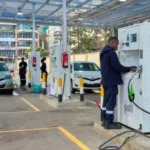
Still, infrastructure is everything. You can’t fuel a car if there’s nowhere to fill it. Gasfil has launched two autogas refuelling stations—one in South B and the other along Ngong Road—and plans to expand.
Macharia says these pilot sites help test user experience and safety protocols, but the goal is a nationwide network. “We’re developing partnerships and looking at mobile refuelling options as well. We want to make LPG available even in places where fuel infrastructure is thin,” he says.
Gasfil estimates that over 10,000 vehicles in Kenya are now running on LPG, a figure that’s steadily climbing as awareness and trust grow.
Safety first
But for many Kenyans, the idea of LPG in a vehicle still triggers anxiety. Fuel leaks and explosions are not unfounded concerns in an environment where regulation often lags behind innovation.
Macharia says Gasfil is addressing this head-on. “We only use high-quality, certified kits, and our technicians undergo rigorous training,” he said.

The company’s systems include advanced safety features like automatic shut-off valves, leak detectors, and secure tank placements. A thorough inspection and client education follow every vehicle conversion.
“There’s a myth that LPG is dangerous. However, autogas has an excellent safety record globally when systems are properly installed and maintained. We’re ensuring that same standard here,” Macharia says.
Technology with a Kenyan twist
The conversion itself is surprisingly straightforward. For petrol vehicles, it involves adding components like an LPG tank, injectors, and an engine control unit, allowing the driver to switch between petrol and LPG seamlessly.
“Most petrol cars, from saloons to SUVs, can be converted. We’re even seeing interest from fleet operators and logistics companies,” Macharia said.
He says diesel engines are trickier. They can’t fully switch to LPG but can run dual-fuel systems in which LPG complements diesel combustion.
Overcoming barriers
Gasfil is also working to educate the public, running campaigns with mechanics, auto shops, and even ride-hailing drivers.
“We’re showing people the math. If you spend KES 3,000 on petrol every few days, imagine switching to LPG and saving 40%. Multiply that over months, and it’s transformative,” Macharia says.
To build trust, Gasfil also ensures fuel quality standards.
“We only supply LPG that meets strict industry specs. This protects engines, reduces emissions, and gives drivers peace of mind,” Macharia says.
Looking ahead: Beyond LPG?
While Gasfil is focused on LPG, Macharia says the company’s long-term ambitions extend beyond autogas.
“We want to play a part in Kenya’s clean energy future. That includes supporting Sustainable Development Goal 7 (Affordable and Clean Energy) and SDG 13 (Climate Action). We’re exploring other alternative fuels too, from biogas to electric vehicle partnerships, but LPG gives us an immediate, impactful way to reduce emissions and costs right now,” he said.
The bigger picture
According to a 2023 UNEP report, the transport sector accounts for 13% of Kenya’s total greenhouse gas emissions, a number expected to rise as car ownership grows. Cleaner fuels like LPG could help offset this, especially for small businesses, matatu owners, and boda boda fleets looking to cut fuel costs.
Macharia remains hopeful. “We’re not just installing kits. We’re building a movement,” he says.
If successful, that movement could help turn Kenya into a leader in clean transport innovation, not in the distant future, but starting today, one conversion at a time.